
Brisbane sandstone relocation at a glance
- Location
- Brisbane region, Queensland
- Route
- House to a commercial warehouse
- Tabletop
- 400 kg
- Table legs
- 200 kg each
- Bench sections
- Approximately 150 kg each
- Bench legs
- Approximately 70 kg each
- Main challenge
- Fragile stone, glued joins & 15+ years in place
- Handling
- Central reinforcement, careful turning & edge protection
Heavy item removals in Brisbane: a delicate sandstone table and bench move
This Brisbane-region project involved moving sandstone table and bench furniture from a house to a commercial warehouse. The tabletop weighed 400 kg, with table legs weighing 200 kg each. The bench sections were approximately 150 kg each, with legs of about 70 kg each.
The weight was only part of the challenge. The sandstone had been in position for more than 15 years and the components were glued together. Delicate bench edges, bonded connections and the long stone sections all needed close attention during preparation and handling.
JB’s approach centred on reinforcing the middle of the tops, carefully turning the sections and arranging protection with the ratchet restraints so that excessive pressure was not concentrated on vulnerable edges. It was a specialist stone furniture relocation requiring the support and restraint arrangement to work together.
Sandstone furniture in place for more than 15 years
Glued connections shaped the handling plan
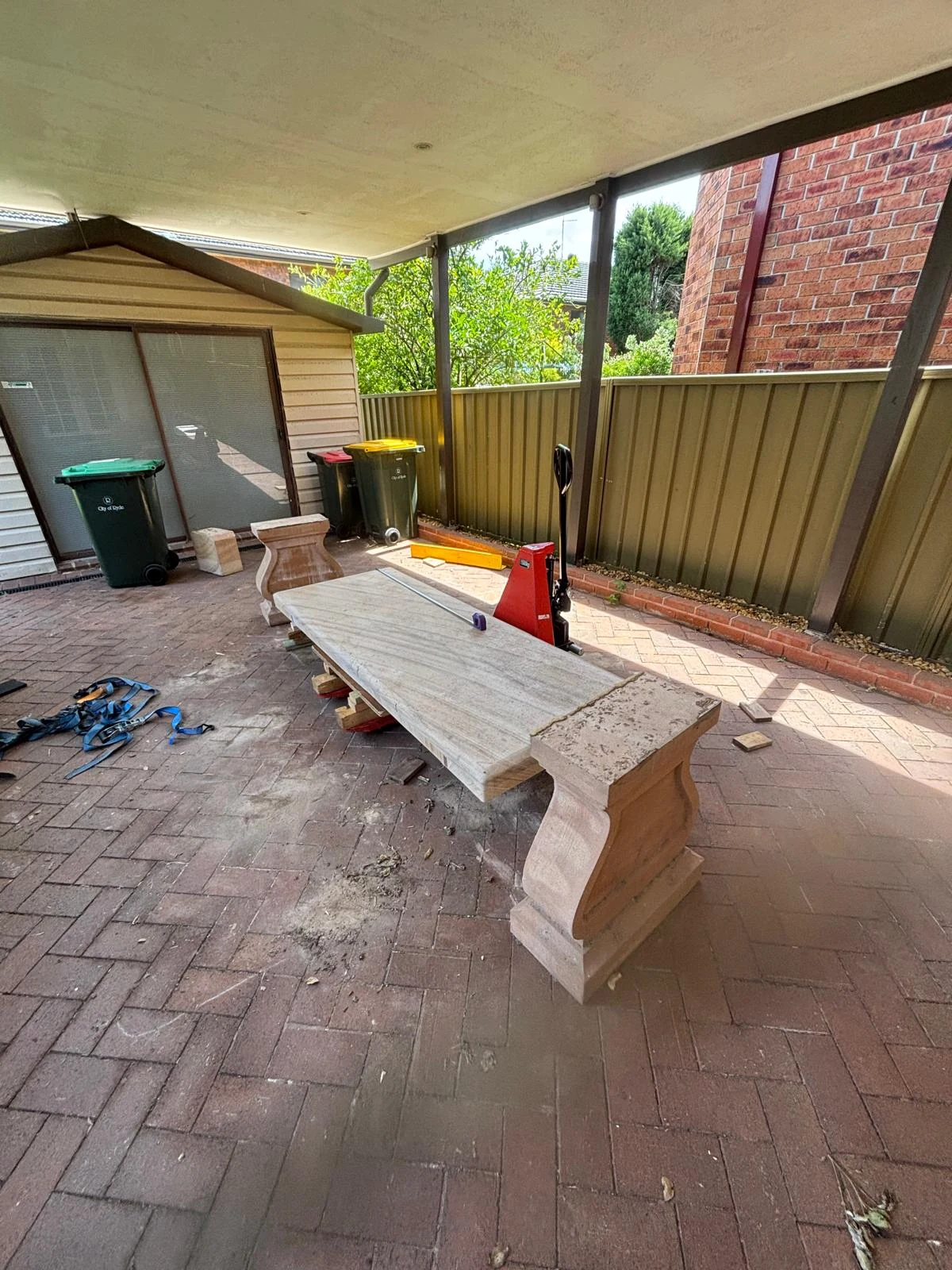
The table and benches were not loose furniture ready to be picked up. Their glued connections had to be considered before the stone could be handled. After more than 15 years in place, moving the furniture required care around the existing joins and the relationship between each top and its supports.
The project called for controlled handling through the preparation and turning stages. The aim was to avoid transferring unnecessary force into a glued connection, a vulnerable edge or an unsupported part of a long stone section.
Delicate bench edges needed particular attention
The edges of the sandstone benches were a concern throughout the job. Their shape and condition mattered alongside the weight of the stone. The handling arrangement therefore had to account for where the stone was supported and where restraints made contact.
Reinforcing and turning the 400 kg sandstone tabletop
Central support for the long stone sections
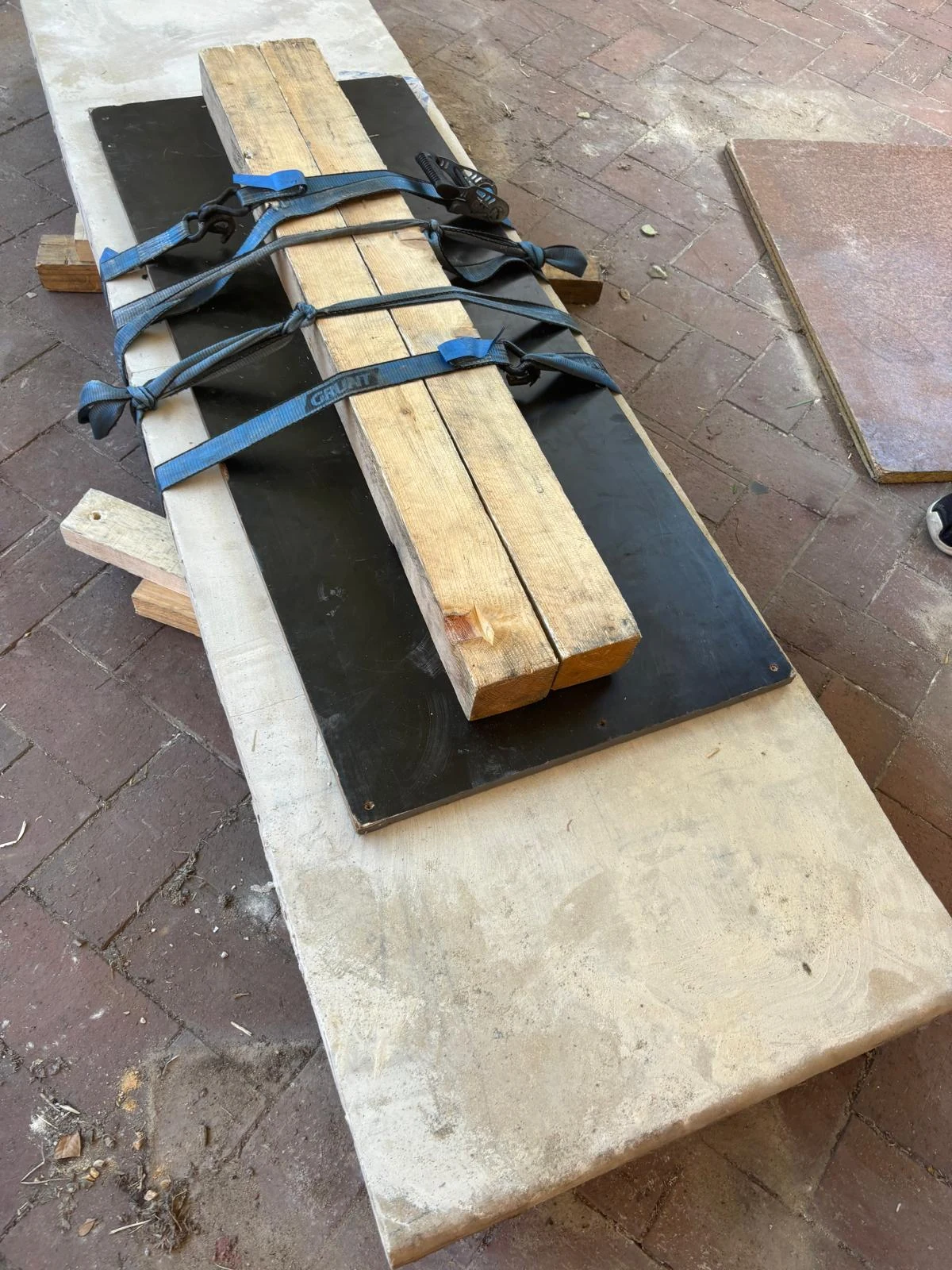
JB reinforced the middle of the sandstone tops as part of the preparation for turning and movement. The photographs show timber, protective panels and straps arranged across a top, followed by the reinforced stone in an upright position.
This central reinforcement was a key part of the method described for the project. It addressed the handling of the long sections while the crew managed the change in orientation and the support beneath the stone.
Careful turning with the protection kept in place
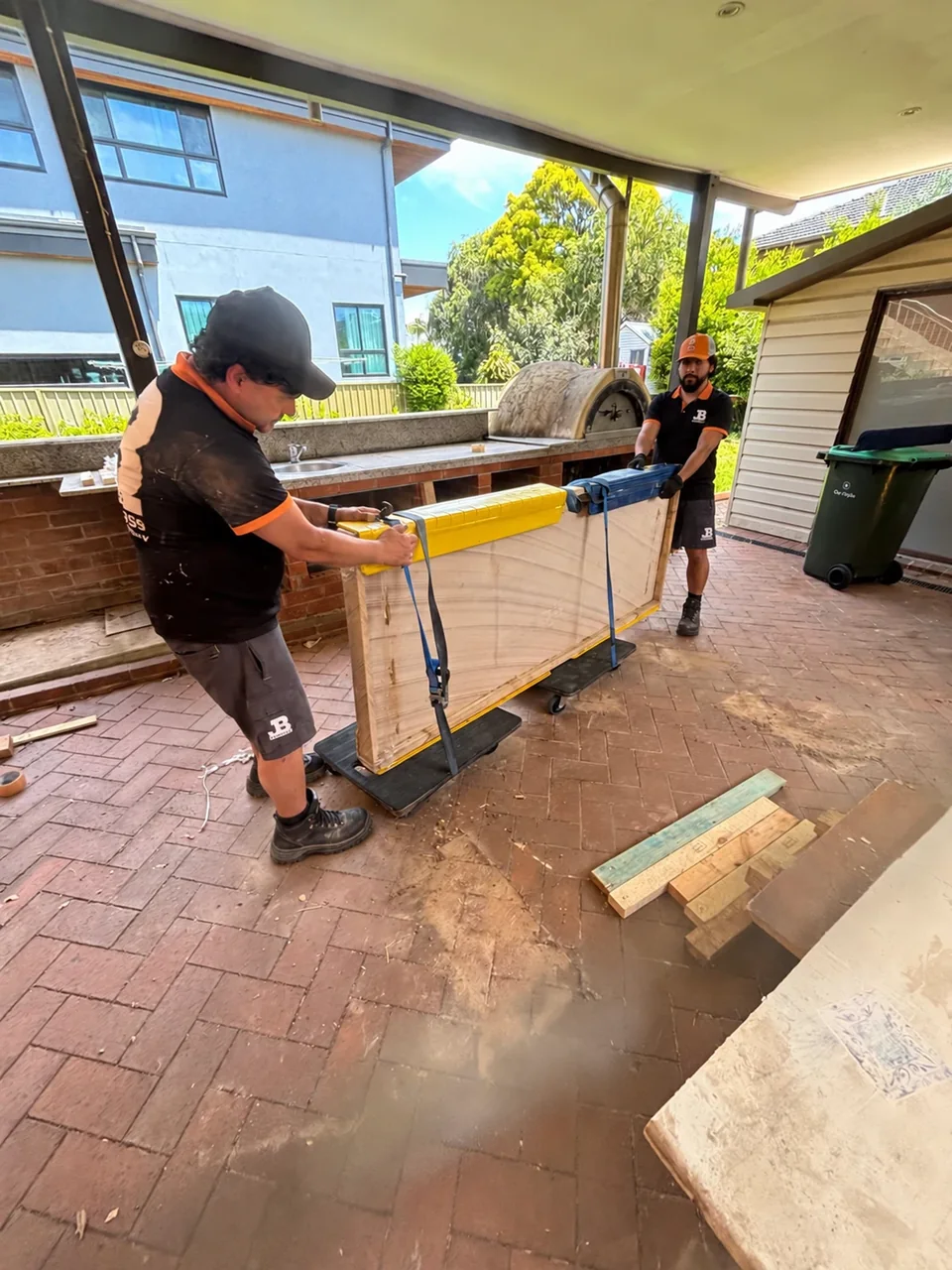
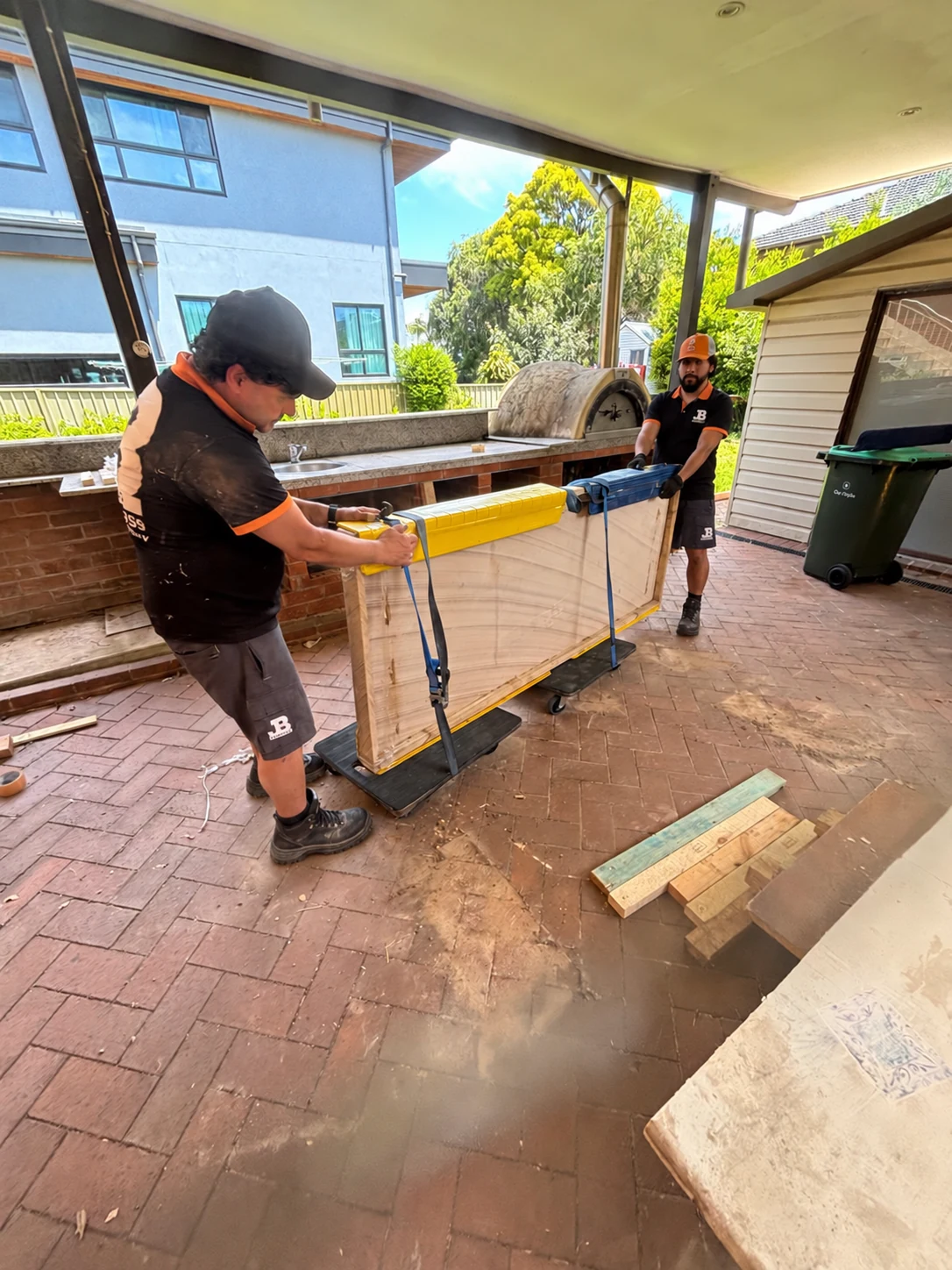
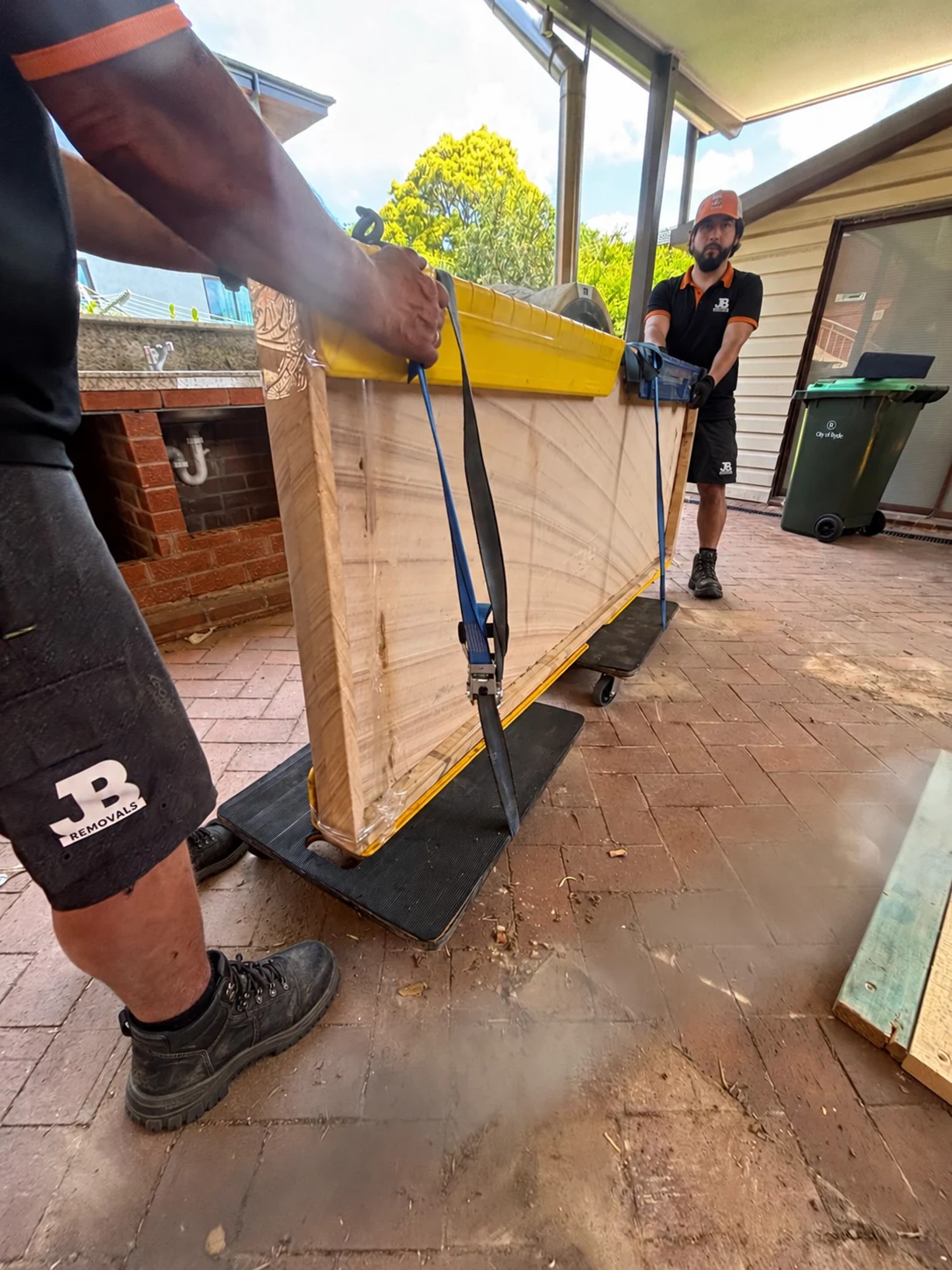
The tops had to be flipped or turned during the move. The crew worked with the reinforcement and protection in place, guiding the stone through the change in position. The upright-handling photographs show yellow padding along an edge, blue restraints, protective backing and supports below.
The combination of a 400 kg tabletop and fragile sandstone made that transition a particularly demanding stage. The handling method had to account for both the load and the condition of the furniture.
Ratchet restraints and sandstone edge protection
Keeping restraint pressure away from vulnerable edges
Ratchet restraints formed part of the arrangement, but the way their force reached the sandstone was important. JB used the reinforcement and protective materials to avoid applying excessive force directly to the delicate edges, where pressure could cause cracking.
The photographs record the particular arrangement used on this furniture. Timber reinforcement, broad protective panels and edge padding are visible alongside the restraints. Those details explain why this move needed more preparation than simply wrapping a heavy table.
Bench sections and heavy stone supports
The benches and their legs required their own handling considerations. With bench sections around 150 kg and legs around 70 kg each, the smaller pieces still represented substantial loads. The table legs, at 200 kg each, were also significant components in the relocation.
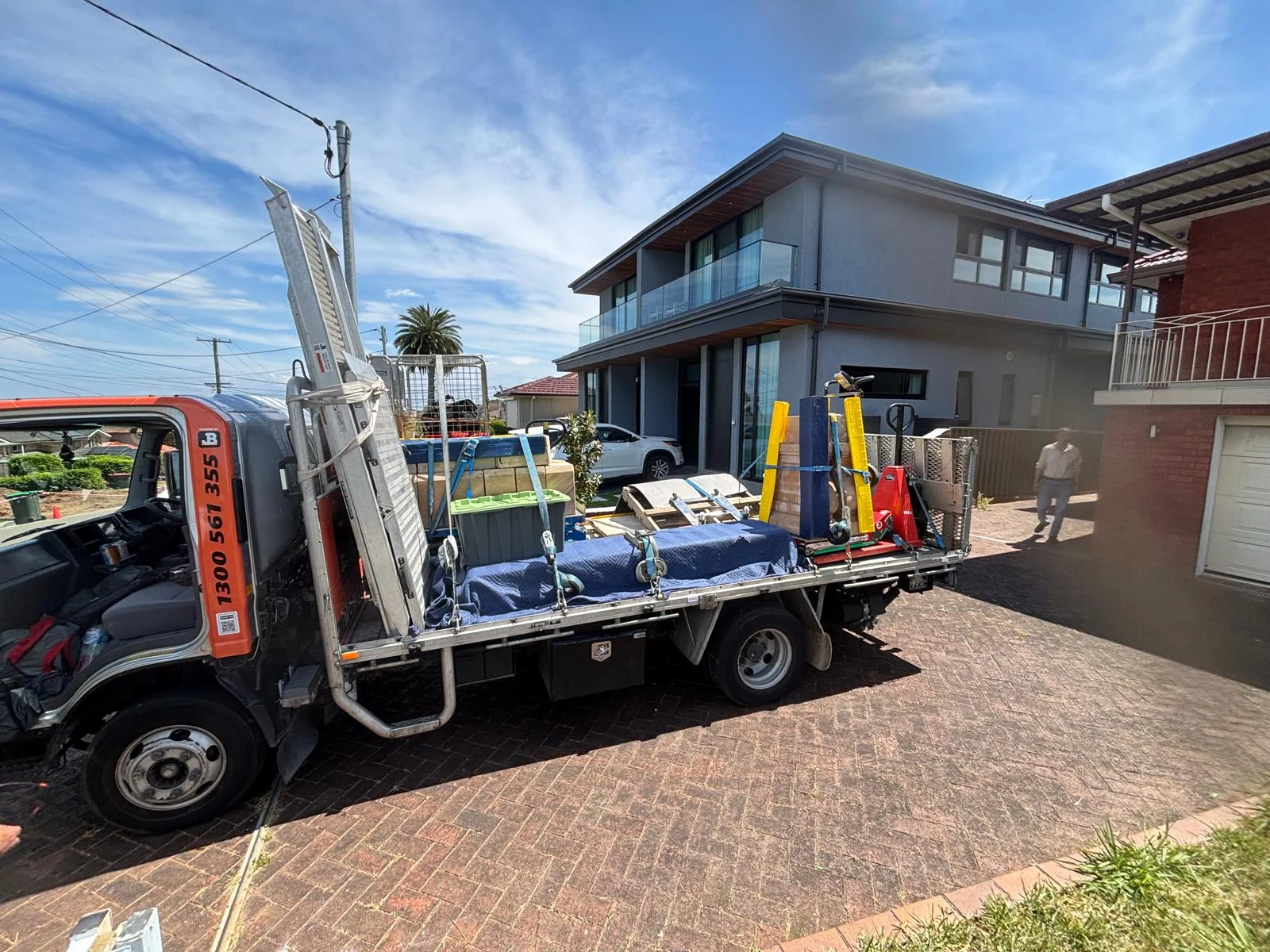
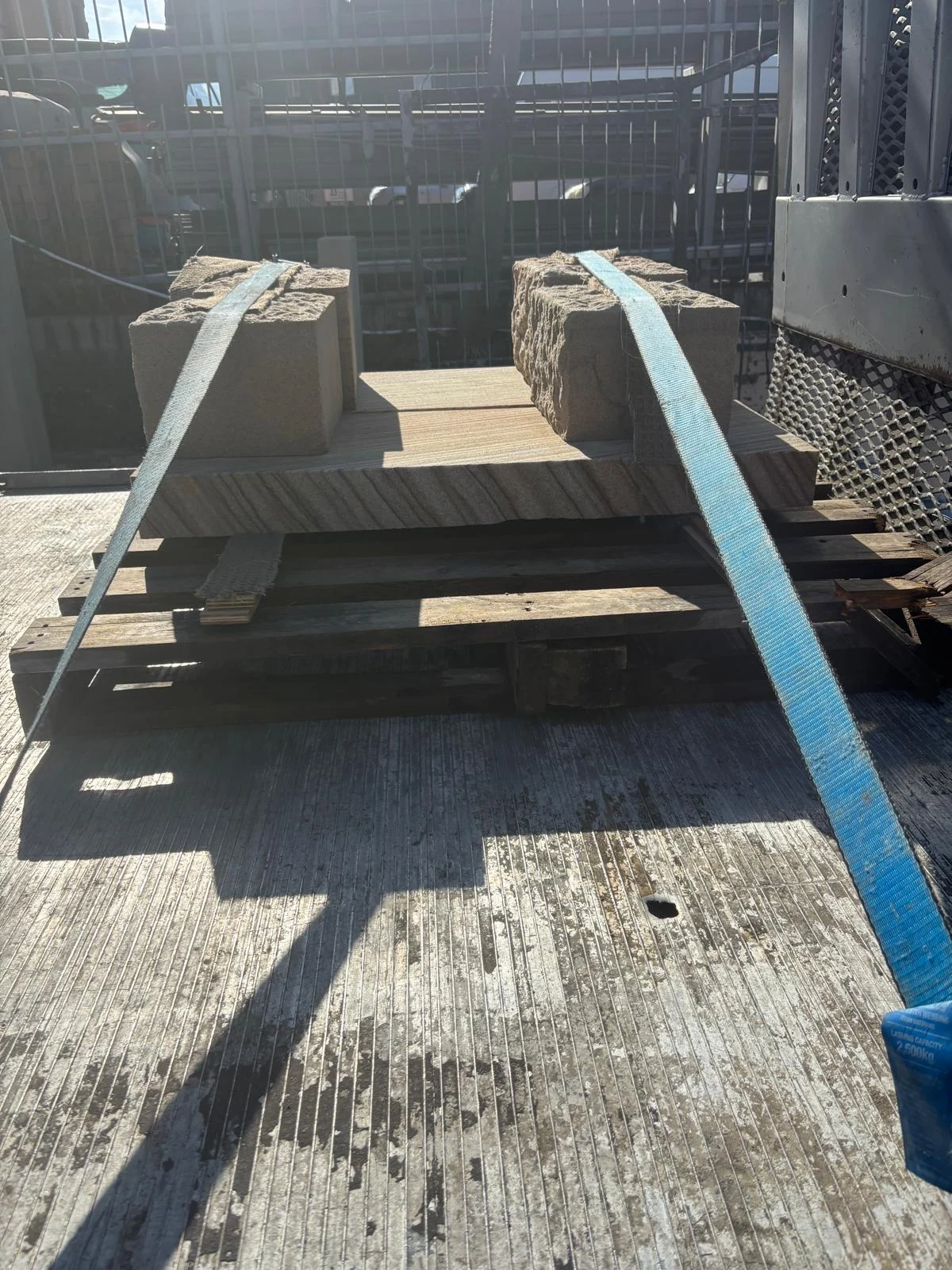
The truck photograph shows an inverted bench assembly supported on timber and restrained on the tray. It gives a close view of how a stone assembly occupied the vehicle, with supports and restraints forming part of the loading arrangement.
A Brisbane house-to-warehouse move with a commercial destination
Connecting residential access with warehouse transport
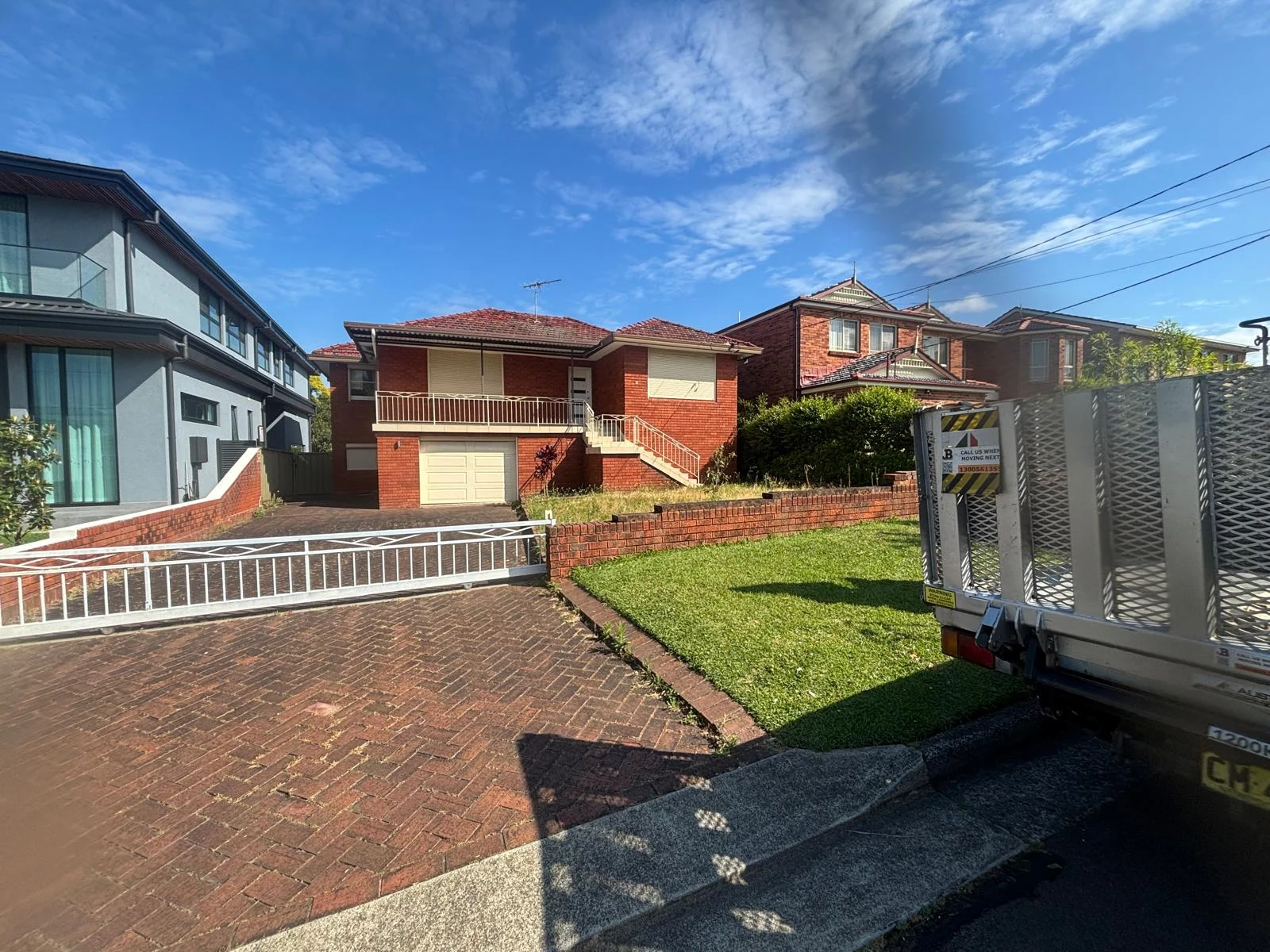
The furniture moved from a residential property to a commercial warehouse in the Brisbane region. That connected two different parts of the relocation: careful handling at the house and transport to a business receiving location.
The supplied photographs document the residential setting, the preparation of the sandstone, upright handling and truck loading. They show the work behind the move before the furniture reached the warehouse.
Specialist stone handling within a business moving scope
For a commercial relocation involving sandstone furniture, the receiving brief should identify where each piece will be unloaded, stored or positioned. A warehouse address alone does not describe the final handling stage: access, storage supports and any later assembly requirements need to be agreed for the actual load.
This project is an example of JB’s heavy-item moving work connecting a home pickup with a commercial destination. The stone’s condition, bonded construction and individual component weights shaped the scope.
PROJECT PHOTOGRAPHY
Sandstone table and bench relocation photos
Seven unique photographs show the furniture at the house, central reinforcement, upright handling, edge protection and truck loading. Open any image for a closer view.
Two handling photographs include presentation edits to clothing and footwear; these edits do not document historical PPE use.
Plan your sandstone table or heavy bench removal in Brisbane
Send photographs of the whole table or bench, the underside, legs, glued connections and any existing cracks or repairs. Include dimensions, known component weights, how long the furniture has been in place and the pickup and delivery access.
For a house-to-warehouse move or another commercial receiving location, include the unloading area and intended storage or final position. JB can review the furniture and route, identify further assessment needs and discuss a scope suited to the particular stone pieces.
Sandstone and heavy stone furniture removals: questions
How heavy were the sandstone table and bench components?
The tabletop weighed 400 kg and each table leg weighed 200 kg. The bench sections were approximately 150 kg each, with bench legs around 70 kg each. These are component weights, not combined furniture totals.
Why was this sandstone relocation particularly challenging?
The furniture had been in place for more than 15 years, the components were glued together and the sandstone and bench edges were delicate. Preparation, central support, turning and restraint pressure all needed close attention.
How was the sandstone protected while being turned?
JB reinforced the middle of the tops and used protective materials as the stone was carefully turned. The photographs show timber reinforcement, protective panels, edge padding and restraints during the handling stages.
Why did ratchet pressure need to be controlled?
Excessive force on the vulnerable sandstone edges could cause cracking. Reinforcement and protection formed part of the arrangement to avoid concentrating restraint force directly on those edges.
Was this a residential or commercial move?
The pickup was at a house and the destination was a commercial warehouse in the Brisbane region. The project combined residential access with heavy stone furniture transport to a commercial receiving site.
Can sandstone furniture that is glued together be assessed for removal?
Yes. Provide photographs of the joins, underside and supports, along with known weights and access details. The construction and condition need to be assessed before a handling method or scope is confirmed.
What should I send for a sandstone table moving quote?
Send overall and close-up photographs, dimensions, component weights if known, details of adhesive connections or previous repairs, both access routes and the intended final position or storage arrangement.
Will the same reinforcement method suit another stone table?
The method must be assessed for each piece. Stone type, condition, dimensions, joints, supports and route can differ. This case study records the arrangement used for this project.