
Brisbane factory relocation at a glance
- Location
- Brisbane, Queensland
- Project
- Aluminium factory & warehouse relocation
- Machinery
- Large workshop & processing equipment
- Storage
- Long-stock racking & sheet materials
- Work areas
- Benches, tools & packed items
- Gallery
- 10 original project photographs
Commercial relocation in Brisbane: the aluminium factory project
A factory move reaches into every part of a business: the machines that process materials, the stock waiting to be used and the benches where the team works. This JB Removals warehouse relocation in Brisbane brought those areas into one aluminium factory and commercial moving scope.
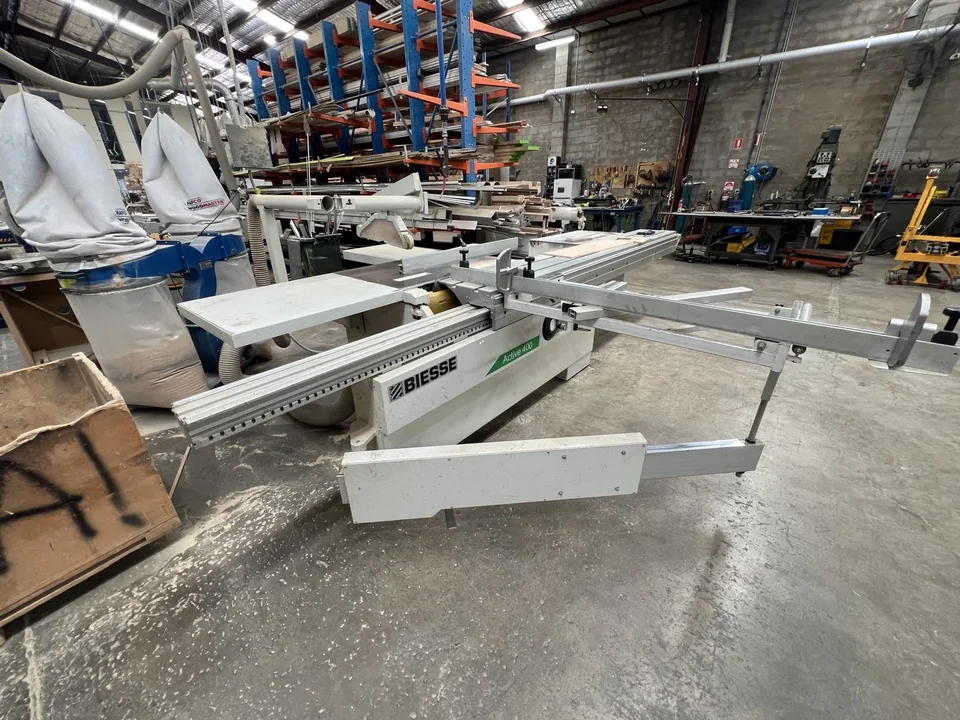
The project included workshop machinery, warehouse materials, workbenches, tools and packed contents. The ten original photographs show long-stock racking, upright sheet materials, large processing equipment, sliding and roller supports, extraction ducting and the work areas around them.
For a business owner planning a similar commercial relocation, this case study helps identify the detail needed before a moving quote: what is being relocated, how it is prepared, how it leaves the existing building and where it belongs in the new premises.
Warehouse relocation: stock, racking and long materials
Long-stock storage and warehouse access
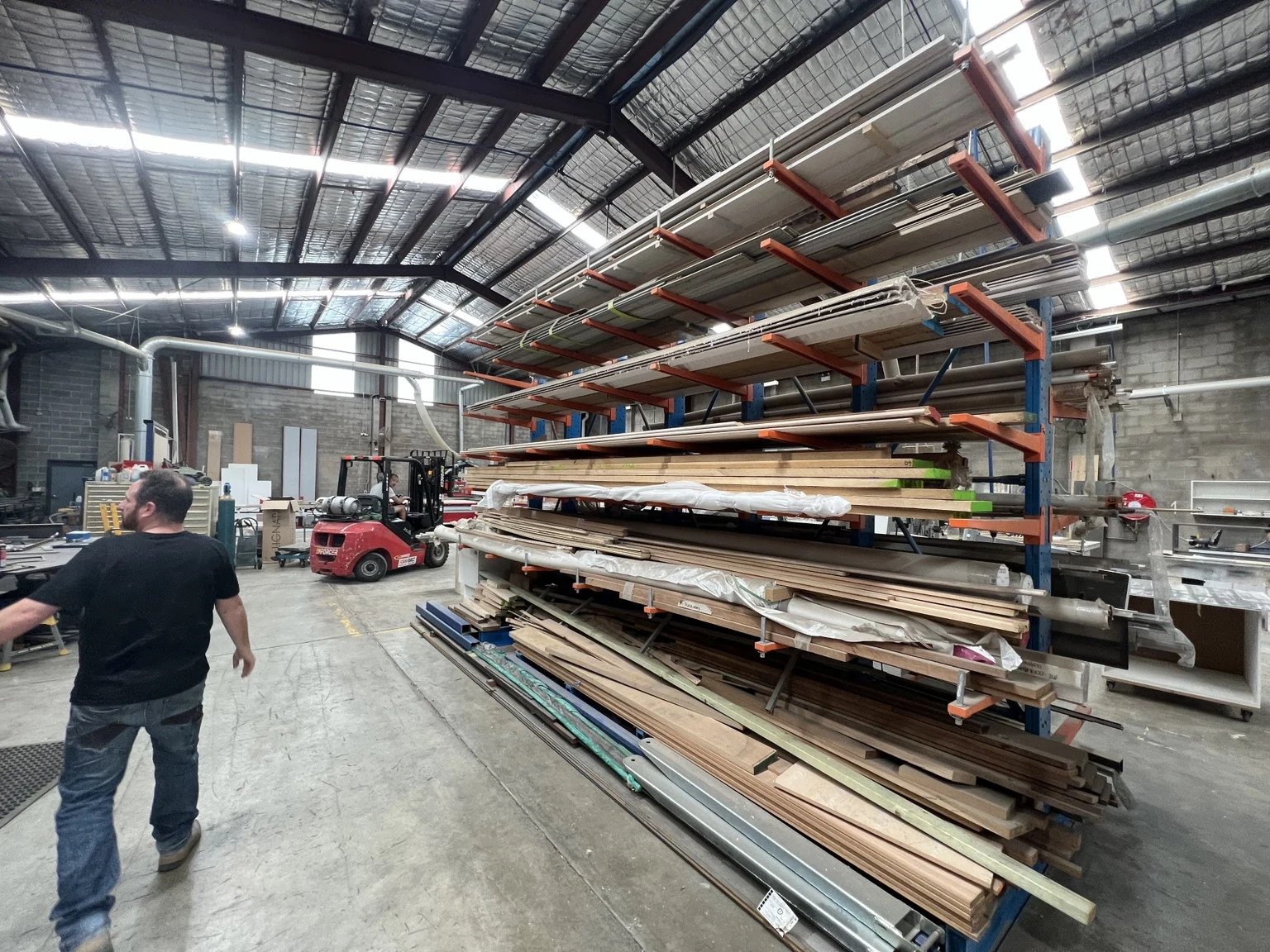
The blue and orange racks hold multiple levels of long materials beside a warehouse aisle. Their length and storage arrangement are central to the warehouse moving brief. A load must be assessed along the full route, including the space required to turn, reach the loading area and enter the receiving building.
For a comparable Brisbane warehouse relocation, identify material lengths, bundle dimensions, known weights and any surface-protection requirements. Stock and the rack that holds it should be listed separately, so there is no ambiguity about what is included in the move.
Sheet materials, cartons and stock identification
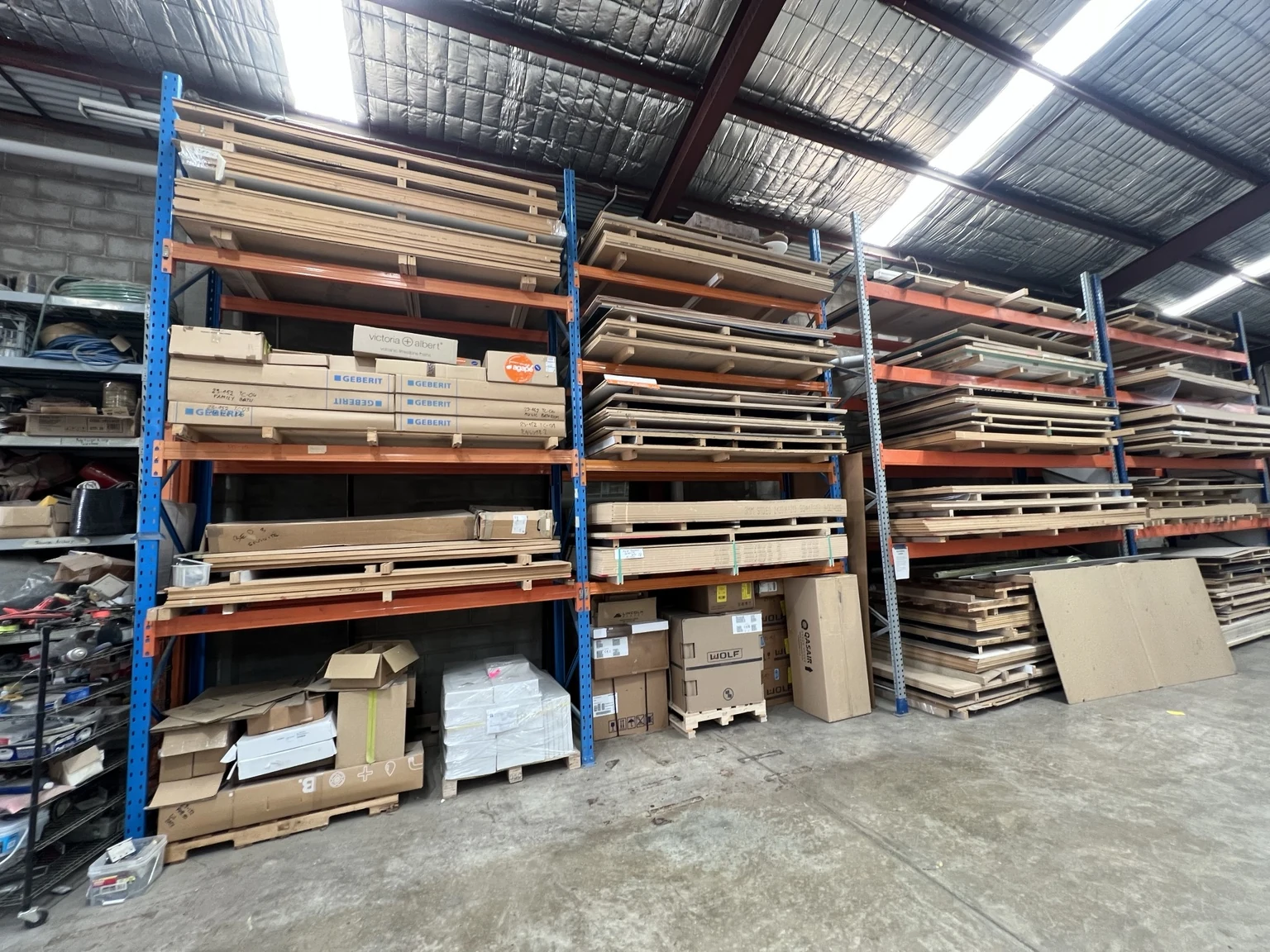
Upright sheets, cartons and smaller workshop items are visible throughout the factory. These need their own inventory alongside the machines. Grouping materials by type, storage location or work area helps the business specify what travels together and where it should be unloaded.
A receiving layout is particularly useful when warehouse stock must remain accessible during a staged move. It gives the relocation team a destination for each group instead of leaving the business to sort mixed loads after delivery.
Factory machinery relocation and equipment handling
Large processing machines and workshop equipment
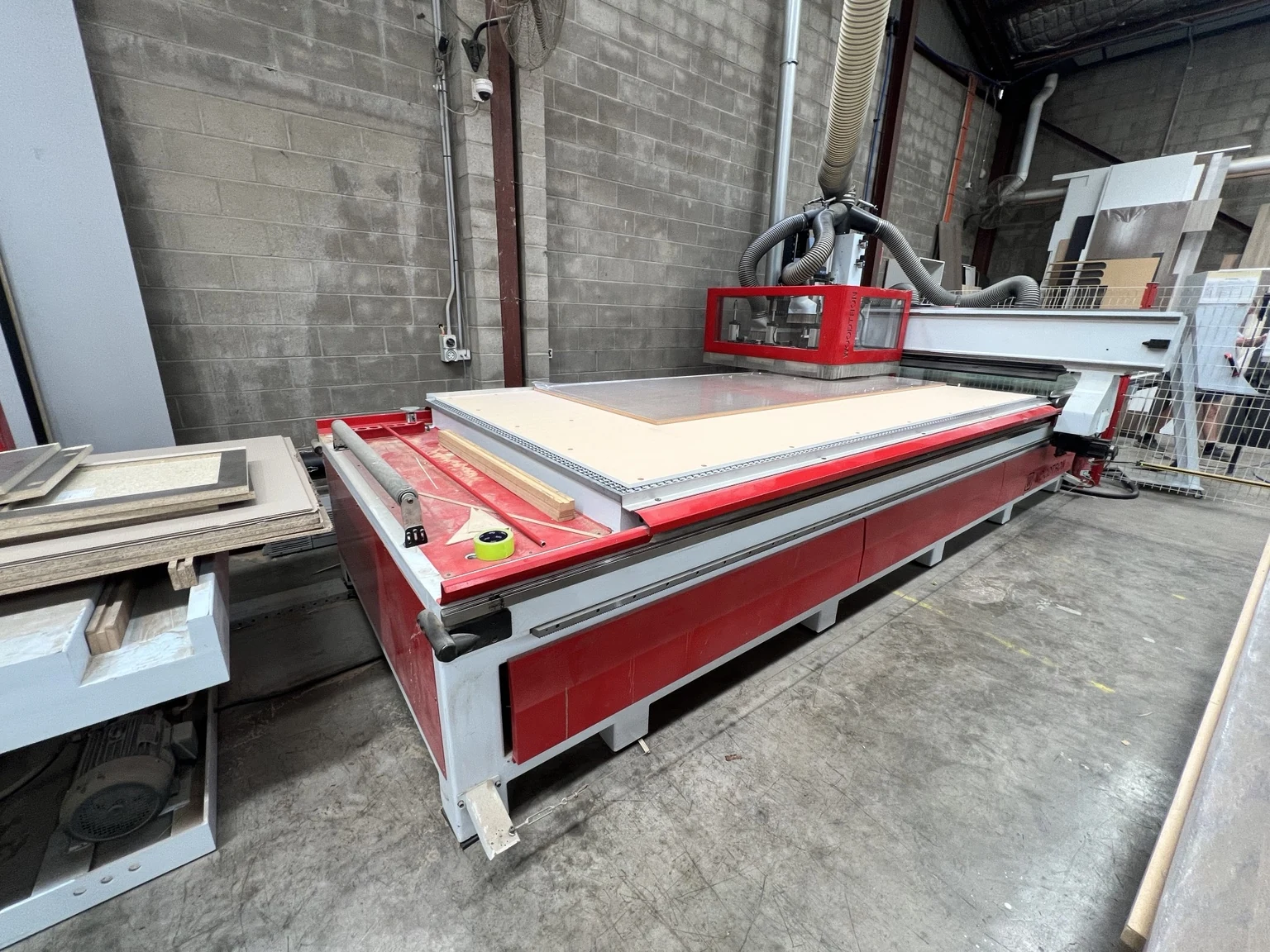
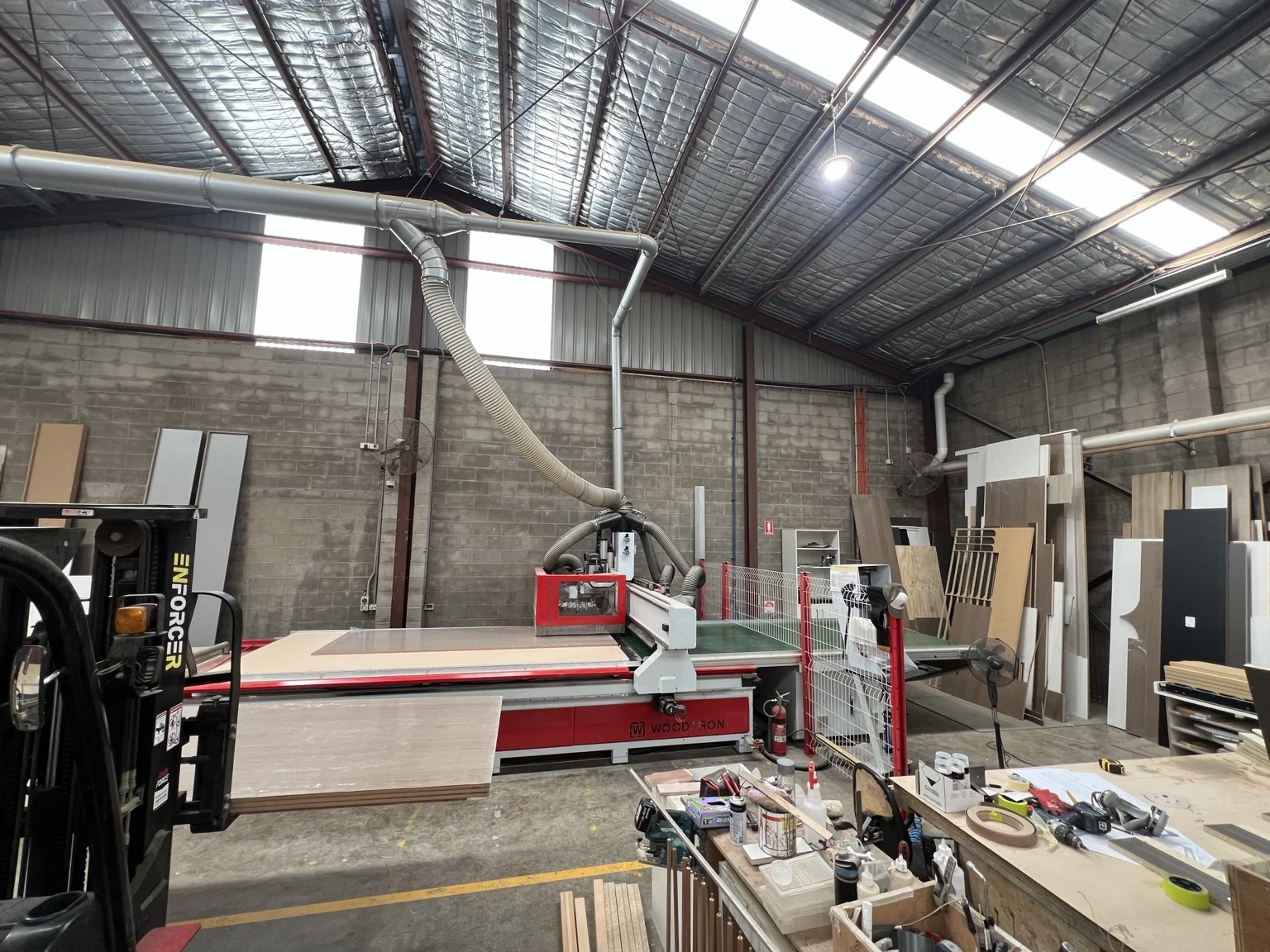
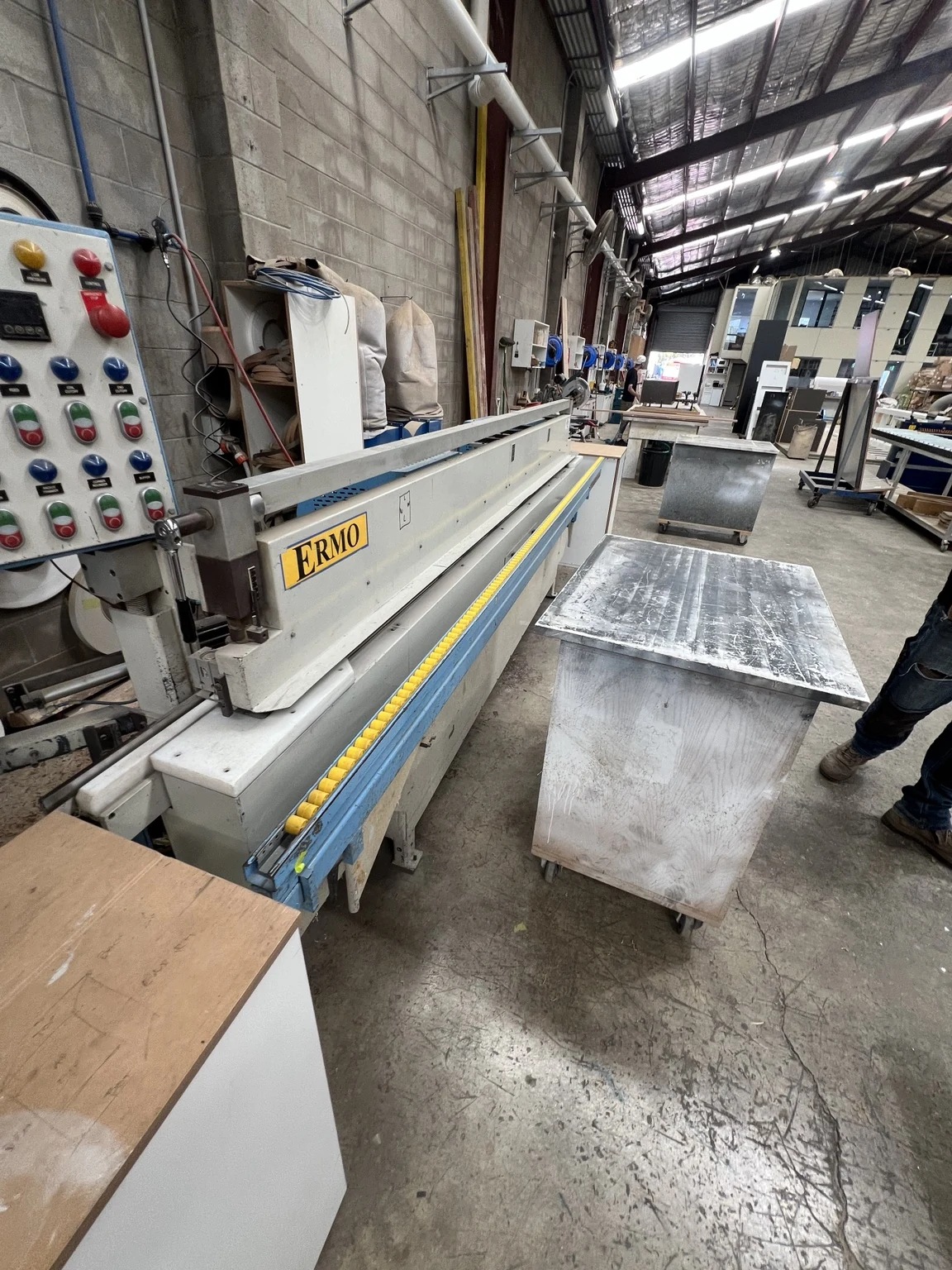
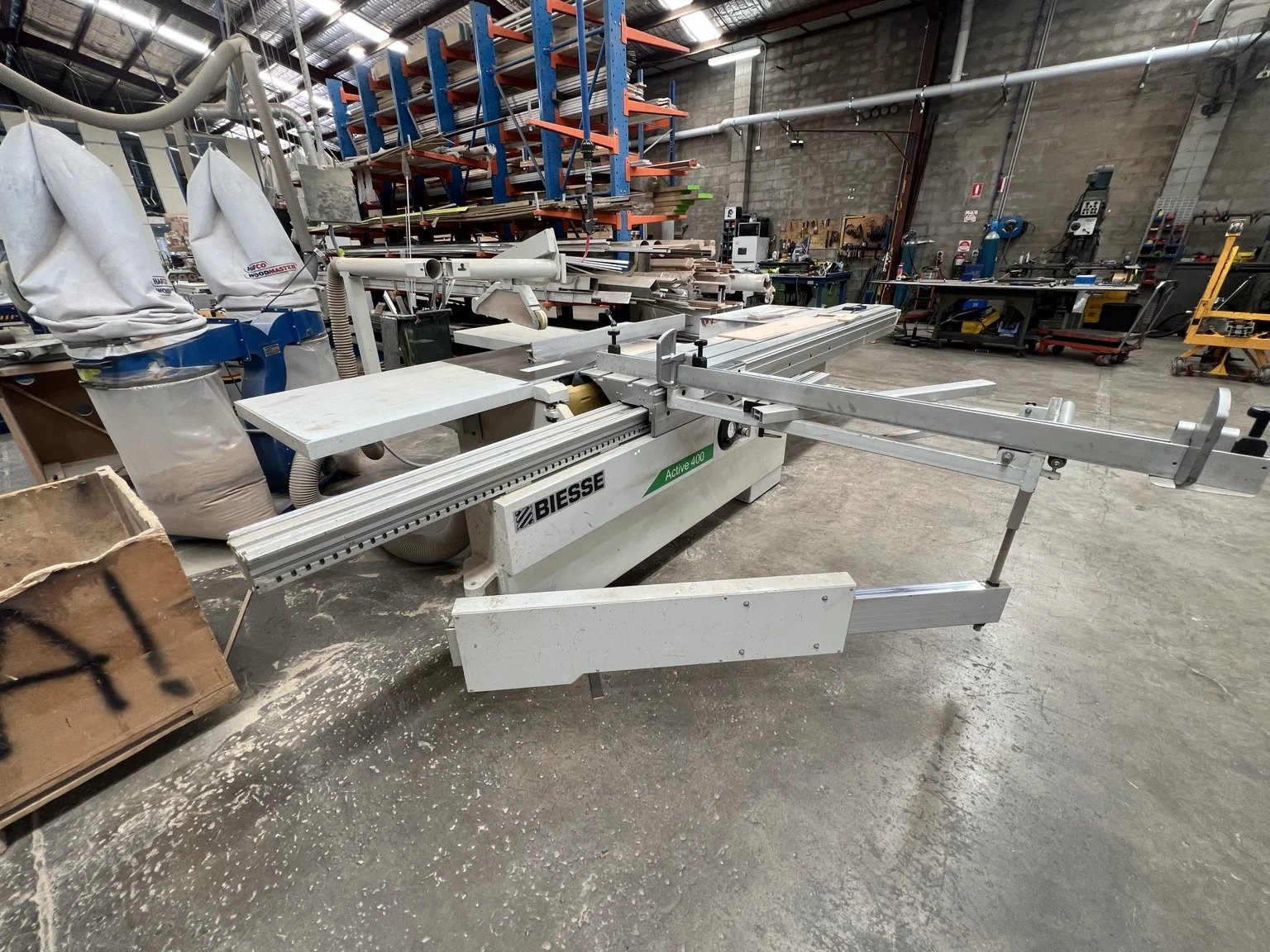
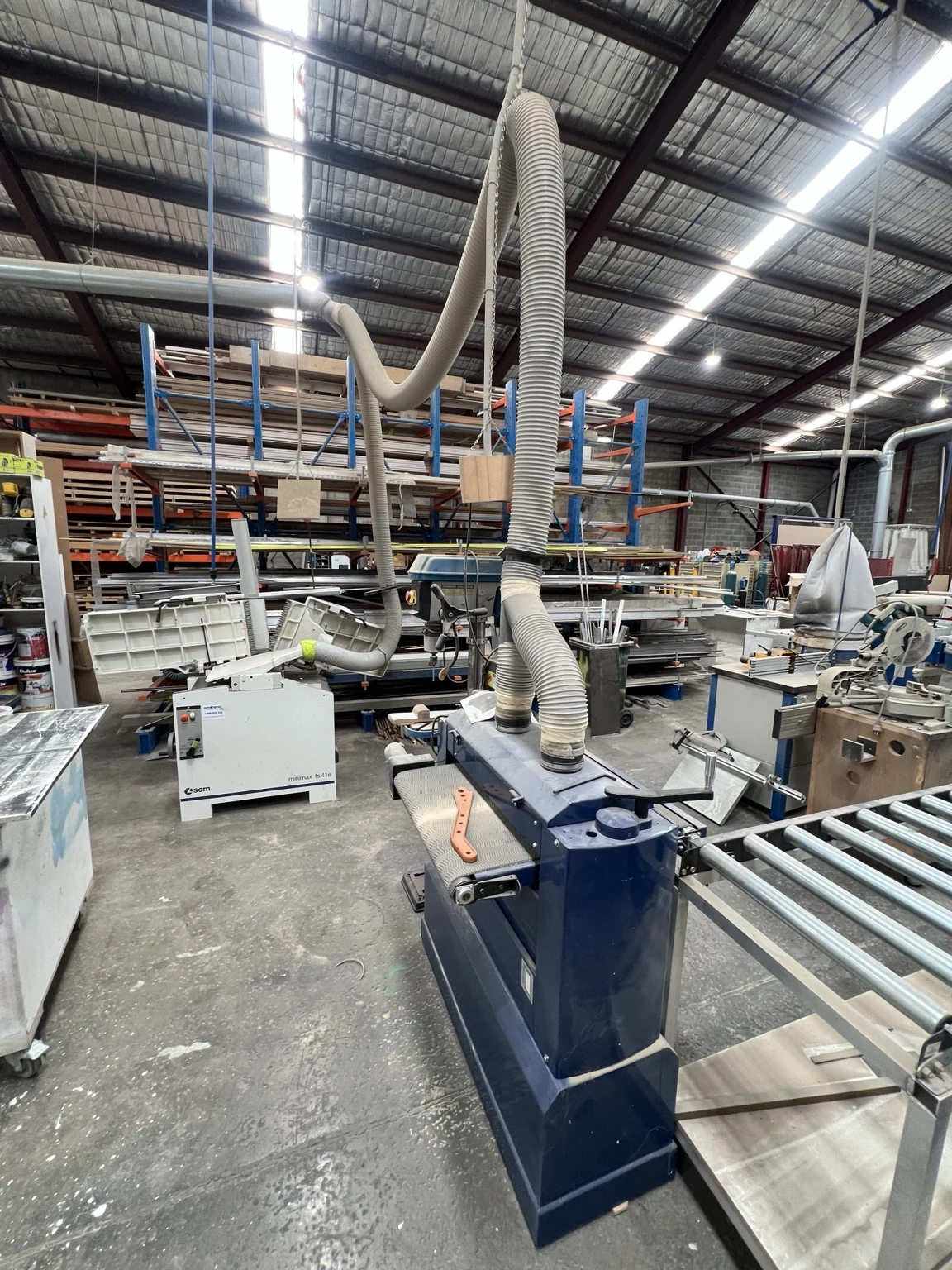
The machinery photographs show a large red-and-white flat-bed machine, a long processing unit with a control panel and workshop machines with extended supports. Their footprint and attachments make them a substantial part of the factory relocation scope.
When arranging machinery removals in Brisbane, supply the make and model, dimensions, known weight and manufacturer transport instructions for each machine. Identify lifting information, removable accessories and any components that require protection or specialist preparation. This information supports equipment selection and a handling plan suited to the actual load.
Sliding tables, roller supports and transport dimensions
Sliding sections and roller supports can extend well beyond a machine’s central body. A machine that appears to fit through a doorway may need a different transport configuration once its accessories and clearances are considered.
Measure the agreed transport configuration and the route at both premises. If components need to be detached, label them and confirm responsibility for removal and reassembly. The machinery-moving brief should also identify the intended final position, so unloading and internal placement can be assessed together.
Brisbane business moves: workshop and office contents
Workbenches, assembly areas and tools
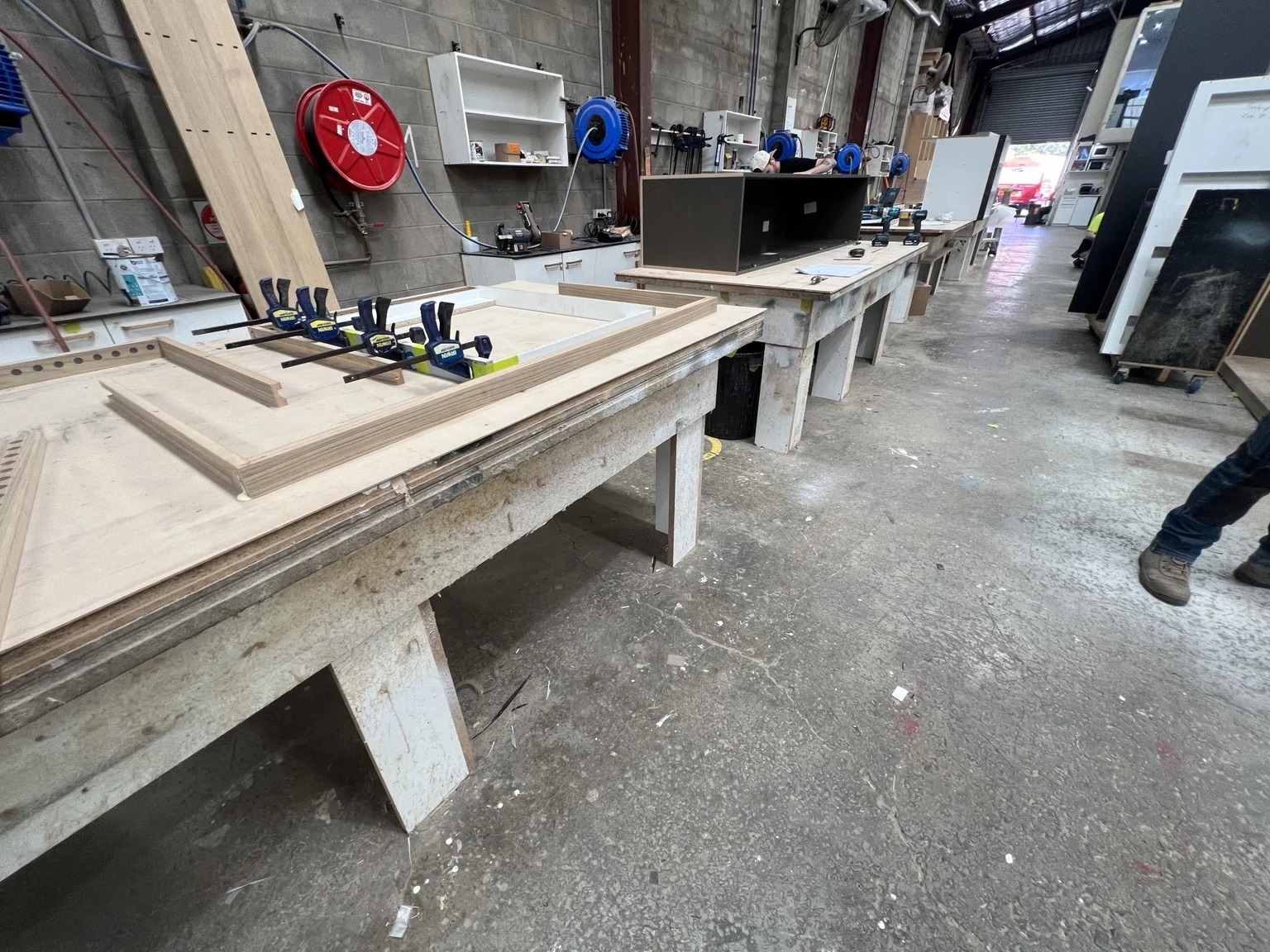
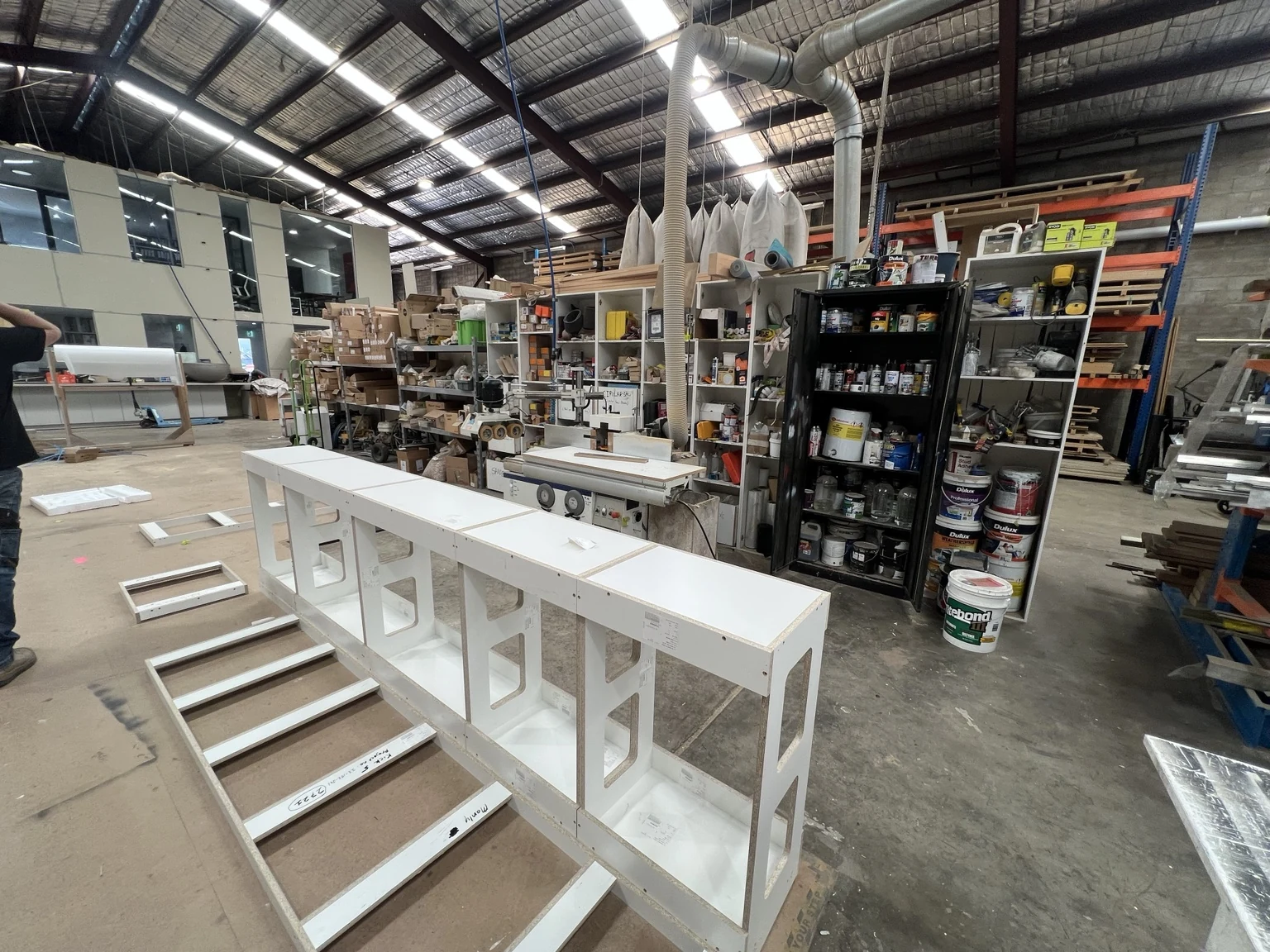
The long benches, hand tools, components and white bench structure shown in the photographs form part of the wider business relocation. These are the everyday work areas around the larger machines, and they need clear inventory entries of their own.
For Brisbane business moves involving a workshop, group loose tools and accessories by work area and label containers for their destination. Record bench dimensions and any required dismantling. Keeping associated items identifiable makes it easier for the business to organise its receiving workspace.
Packed items, storage and internal office areas
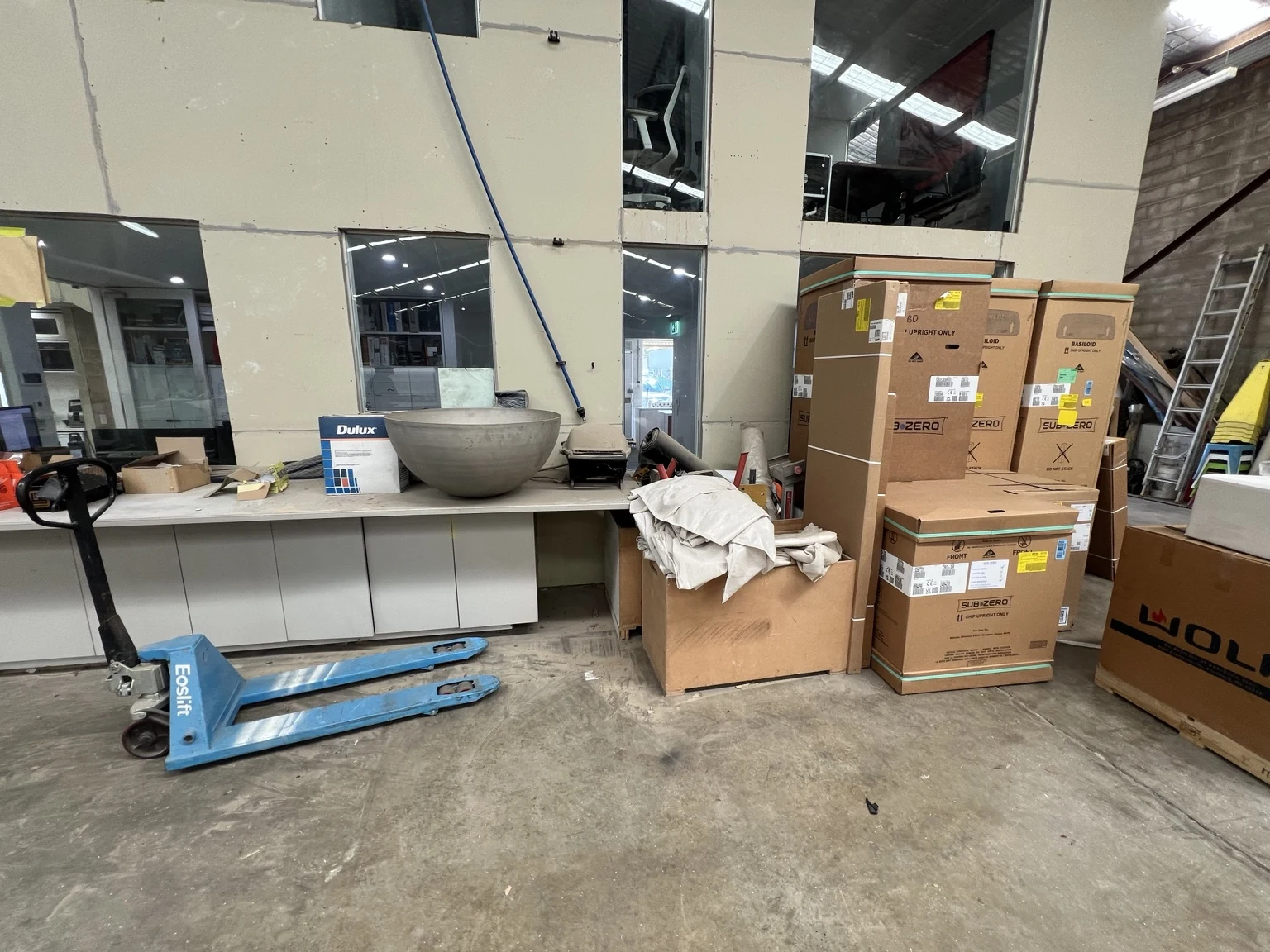
Stacked cartons, workshop furniture and a blue pallet jack are pictured beside an internal office area. This part of the scope illustrates the breadth of a commercial premises move: machinery, stock, furniture and packed contents all need to be accounted for.
Businesses seeking commercial removalists in Brisbane should provide the full scope, including office or administrative contents that sit alongside the warehouse. IT disconnection, confidential records and equipment reconnection should have clearly assigned responsibilities before moving day.
Planning a Brisbane warehouse relocation around business operations
Moving sequence, loading access and the receiving layout
A commercial relocation needs a sequence that fits the business’s access and operating requirements. For a new project, identify collection and delivery contacts, loading restrictions, vehicle access, available moving hours and any items that must remain available until a particular stage.
Agree which loads need to arrive first and where larger machines, benches and stock will be placed. A clear destination layout helps shape unloading order and the internal route. Where a staged relocation is needed, confirm the responsibilities and handover points for each stage in the written scope.
Extraction, electrical services and machine preparation
Extraction ducting and hoses are visible around several machines in this project. A factory moving assessment should identify these connections alongside electrical supplies and any compressed-air or other services.
The business and its authorised technicians should define isolation, disconnection, preparation, reconnection and commissioning responsibilities. Racking dismantling or installation should also be specified separately. These details help establish what the relocation crew will handle and what must be completed by the business or its nominated specialists.
ORIGINAL PROJECT PHOTOGRAPHY
Brisbane factory relocation photos: machinery, stock and work areas
Explore ten original photographs from the aluminium factory and warehouse project. The gallery records the equipment and contents in the commercial relocation scope. Open any photograph for a closer view.
Plan your commercial relocation in Brisbane
Moving a warehouse, aluminium factory or workshop? Give JB a clear picture of the business move: your equipment and stock inventory, photographs, dimensions, known weights, both locations and preferred timing.
Include long-material measurements, loading restrictions, service-disconnection requirements and a receiving layout where available. JB can review your warehouse relocation requirements and discuss the crew, equipment, transport and preparation needed for the agreed scope.
Warehouse and commercial relocation in Brisbane: FAQs
What did this Brisbane factory project include?
The project involved an aluminium factory and warehouse relocation. The photographs show long-stock racking, sheet materials, workshop and processing machines, extraction equipment, benches, tools and packed items.
Can factory machinery and warehouse stock be assessed together?
Yes. Provide the full inventory so machinery, stock, benches and smaller equipment can be considered in the commercial relocation scope. Different loads may need different preparation and handling arrangements.
What information is needed for a factory relocation quote?
Send equipment photographs, make and model where available, dimensions, known weights, service connections and access details at both sites. Include stock lengths, storage requirements and the available moving window.
Does a factory move include electrical and extraction disconnection?
Include those requirements in the brief and agree responsibility in writing. The business and authorised technicians should define any isolation, disconnection, reconnection and commissioning work.
Can warehouse racking be included in the moving scope?
Identify it separately from the stock. Confirm whether it is being moved, the required dismantling and reinstallation work, and the receiving layout. These tasks need an agreed scope and suitable personnel.
How are large machines and long materials prepared for transport?
Preparation depends on the equipment, load dimensions and manufacturer instructions. Provide the details so handling supports, accessories, transport arrangements and access can be assessed for the particular items.
Can a Brisbane business move be planned in stages?
Include your preferred stages and operating requirements in the enquiry. Access, transport, machine preparation and destination readiness determine whether the proposed sequence is practical. Agree each stage before booking.
How can we plan a warehouse move around business downtime?
Identify equipment and stock that must remain available, shutdown windows and the order needed at the new premises. Coordinate the moving sequence with your own technicians and receiving team. Any downtime arrangements must be agreed for the specific project.