Specialist moving across Brisbane
For Eagle Farm or Rocklea machinery, identify the release order and supplier preparation before describing the stairs. At a CBD or Fortitude Valley receiving site, confirm whether the route includes a goods lift before or after the stair stage. Include the exact address, final position and who can authorise access changes.
Machinery removalists: define the machine before the stair route
Internal machinery relocation
Define the current position, the stair or floor route and the receiving support within the site.
Workshop-to-workshop transport
Connect machine release, stair handling, loading, road transport and the destination handover.
Provide the machine type, make, model, documented weight and dimensions. Include protrusions, removable components and lifting or support information supplied by the manufacturer. Describe how the machine stands now and whether it is anchored, connected, crated or already prepared for transport.
Isolation, disconnection, drainage, specialist dismantling and later calibration need named responsibilities. The moving plan should identify when the equipment becomes available to JB and what work remains with the owner, supplier or technical contractor.
Stairs, landings and changes of support
Photograph each flight, landing and turn, plus the approach and the space beyond the last step. Include usable widths, headroom, thresholds and floor changes. Long machines, high centres of gravity or permitted-orientation limits can affect the route even when the nominal weight fits an equipment category.
A stair climber is one possible handling tool, not an automatic solution. JB assesses the complete load and working space before confirming whether powered stair equipment, a supported alternative or further inspection is appropriate. A route may require different equipment before and after the staircase.
Lifting, shifting and final equipment positioning
A factory equipment move can combine gantry support, slings, jacking, skates, pallet handling, trolleys or vehicle loading. Transfers between those stages need their own space, supports and control. Supply photos of both the loading interface and the receiving position so the scope reaches beyond the stairs.
Where the item cannot follow the initially proposed route, discuss the constraint with JB before changing the handling point or preparing a different opening. Alternative access, crane assistance or building work requires its own assessment and responsibilities.
Factory downtime and commercial handovers
Separate physical moving attendance from the time needed to stop, disconnect, reinstall and return a machine to service. For a staged workshop relocation, list which items must stay operational, which can be released first and when each destination position becomes ready.
Nominate the person releasing the equipment, the contact controlling building access and the receiving representative. Include induction, loading, lift or working-window information that applies to the actual site. Update those arrangements if the supplier’s timing, route or final position changes.
A written scope for machinery over stairs
The quote should identify the machines and locations, assessed route, preparation, equipment stages, crew, protection, vehicle transport and final placement. Record inclusions, pending information and work assigned to other providers so the handover is clear.
JB’s published Sydney machinery and lift-equipment projects provide real examples of restricted stair handling. They demonstrate particular loads and arrangements rather than setting the crew or equipment for another factory. Send what you know so the next assessment step can be agreed.
RELEVANT JB EXPERIENCE
Real Sydney projects behind the Brisbane expansion
These photographs and case studies document Sydney work. They illustrate relevant loads and methods; the approach for your property is assessed separately.
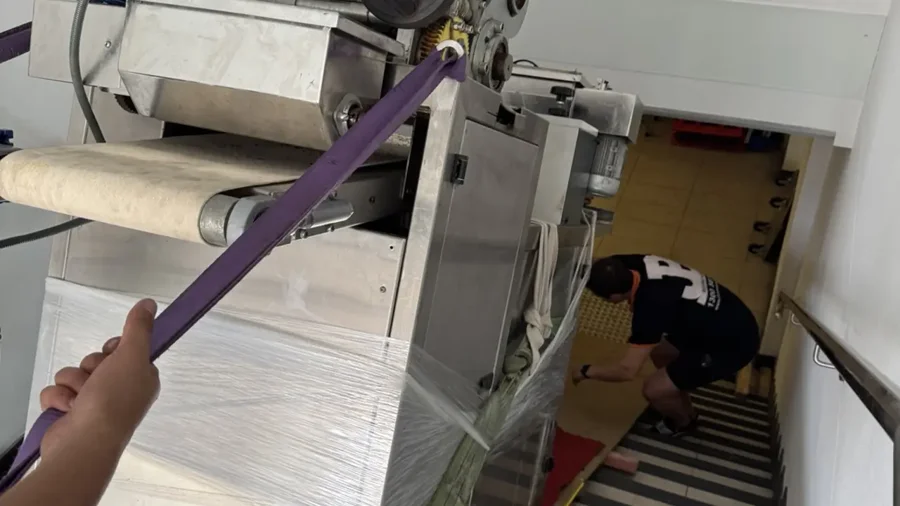 500 kg
 machine down a stair ramp
A 500 kg commercial machine travelled down a restricted stepped route in Marrickville using a custom ramp, rollers, haul-back restraint and controlled lifting support.
Read the Sydney case studyFind your local area
Read a location-specific access guide and review relevant project experience.
View all 10 Brisbane area guides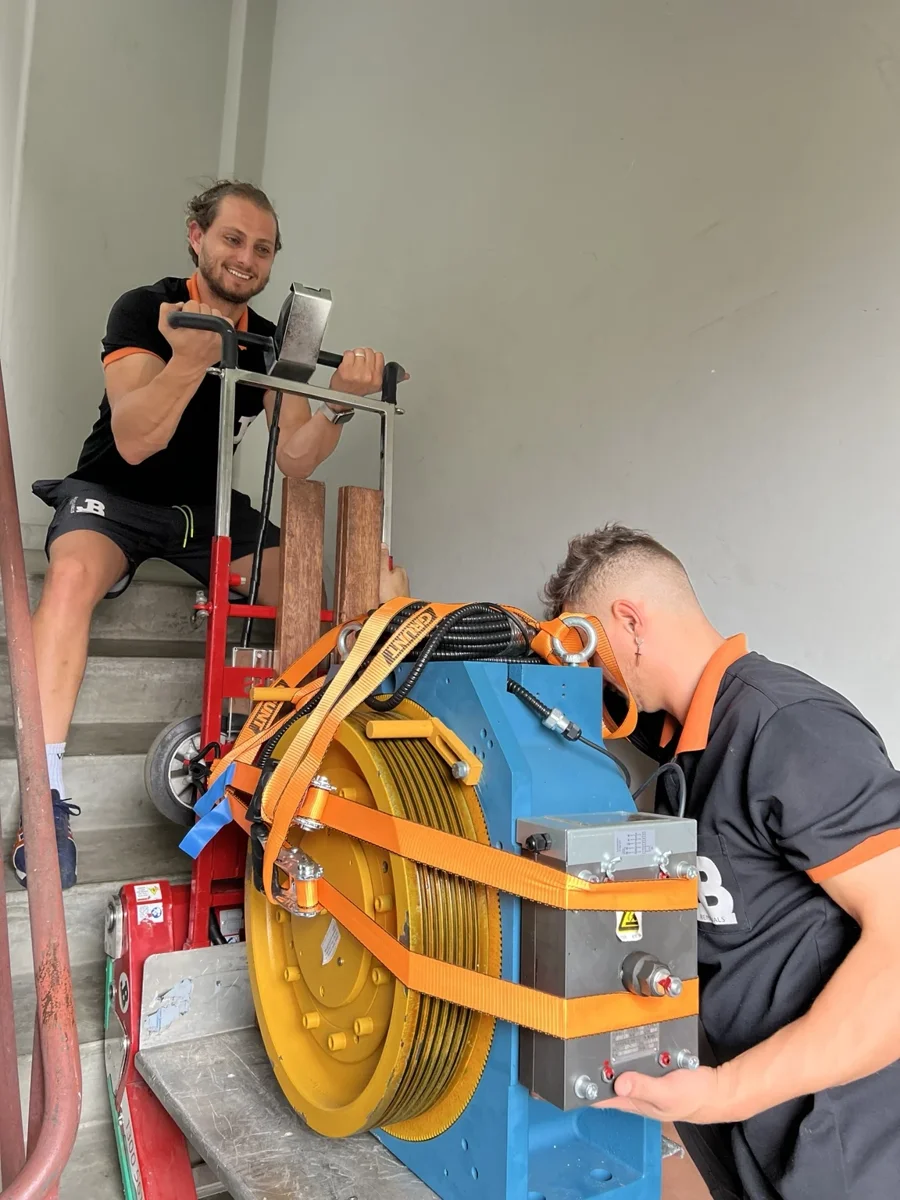 Specialist handling
Lift machinery through a confined staircase
JB handled lift-shaft machinery on a tracked stair climber, using securing straps and coordinated handling within a confined staircase.
Read the Sydney case studyPrepare your machinery movers · stair access enquiry
A complete brief helps JB identify the handling stages and prepare a project-specific scope.
- Item identification, photographs and any manufacturer specifications
- Known weight, dimensions, preparation status and handling restrictions
- Both addresses, pickup and destination route photos
- Stair, lift, doorway and loading details where relevant
- Preferred timing, site contacts and the agreed final position
Where information is unavailable, say so. The team can explain whether further measurements, photographs or an inspection are needed before the method and price are confirmed.
Start your project enquiryMachinery movers · stair access in Brisbane: your questions
Can you assess a single machine over stairs in Brisbane?
A single load can be assessed on its own. Start with the item, both locations and the access information you have; JB can identify any further details or inspection needed.
Can JB provide the transport as well as the lifting?
Yes. Collection, loading, road transport, unloading and final placement can be included in a defined A-to-B scope.
What if I do not know the exact weight or measurements?
Mark those details as unknown and send what you have. Manufacturer information, additional measurements or an inspection can be discussed during assessment.
How are the crew and moving time confirmed?
The equipment stages, load, preparation, access and final placement determine the proposed arrangement. A previous project’s headcount or duration is not a standard quote for another job.